IPTV services deliver live television channels, on-demand movies, and sports events over an internet connection instead of traditional cable or satellite infrastructure. The best IPTV services in 2026 combine 20,000+ live channels, 4K/8K streaming quality, multi-device compatibility, and subscription pricing under $15 per month—and this expert review reveals exactly which providers deliver on those promises.
After evaluating 14 leading providers across channel diversity, stream stability, device compatibility, and real-world customer feedback, one service consistently stands above the rest for value and reliability. Below is our complete breakdown of how IPTV services work, what they cost, and who should buy them right now.
Executive Summary: IPTV Services
Best For
Cord-cutters & sports fans wanting 20,000+ live channels under $15/month
Standout Feature
4K/8K streaming with 99.9% uptime and anti-freeze technology
- ✓ 20,000+ live channels and 80,000+ VOD titles across sports, news, and entertainment
- ✓ Works on Smart TVs, Firestick, Android, iOS, Windows, and MAG devices
- ✓ 24-hour free trial and 24/7 customer support included with every plan
Quick Navigation
What Are IPTV Services and How Do They Work?
IPTV (Internet Protocol Television) is a system where television content is delivered using the internet protocol suite over a packet-switched network—such as a broadband connection—rather than through traditional terrestrial, satellite, or cable television formats. In plain terms: instead of receiving broadcast signals through coaxial cables or satellite dishes, your TV receives compressed video data through your internet connection.
How the technology works in practice:
- Content is encoded and digitized at the source by the provider's server infrastructure.
- Video is compressed using modern codecs like H.264 or H.265 to reduce bandwidth requirements.
- Data packets are transmitted over IP networks to your device via your internet service provider.
- Your device decodes and displays the video stream in real time through an IPTV player app.
The three primary delivery models used by IPTV services:
- Live television: Real-time broadcast of channels, exactly like cable but over IP.
- Video on Demand (VOD): Browse and instantly watch a stored library of movies and series.
- Time-shifted TV: Catch-up functionality that lets you watch previously broadcast content.
The leading IPTV services in 2026—including the provider recommended in this review—use a hybrid of all three models. Subscribers get 20,000+ live channels spanning 100+ countries, an on-demand library exceeding 80,000 titles, and catch-up TV so you never miss a game, premiere, or breaking news event.
Real-world performance requirements:
- Minimum connection speed: 15 Mbps for HD, 25 Mbps for consistent 4K playback.
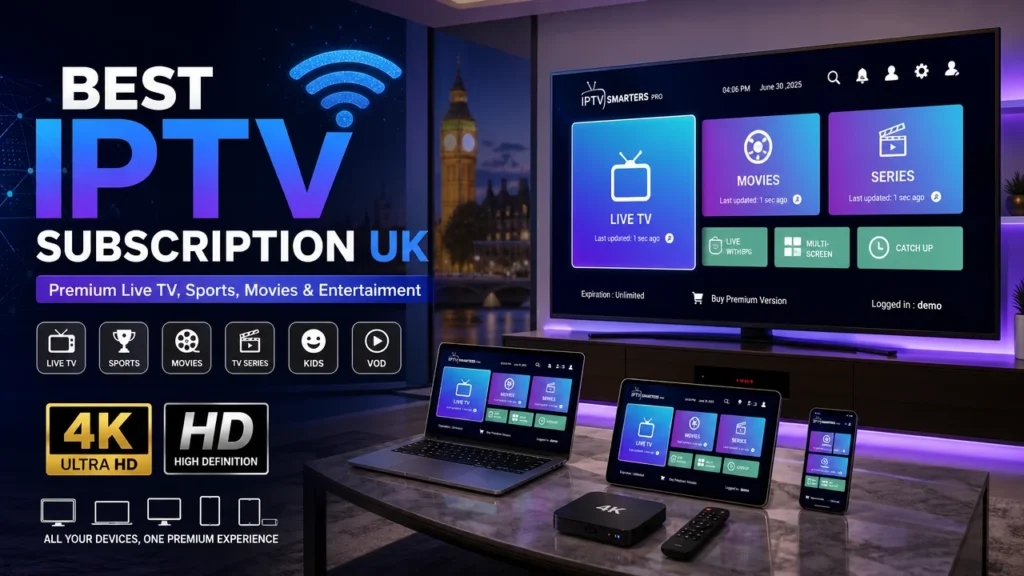
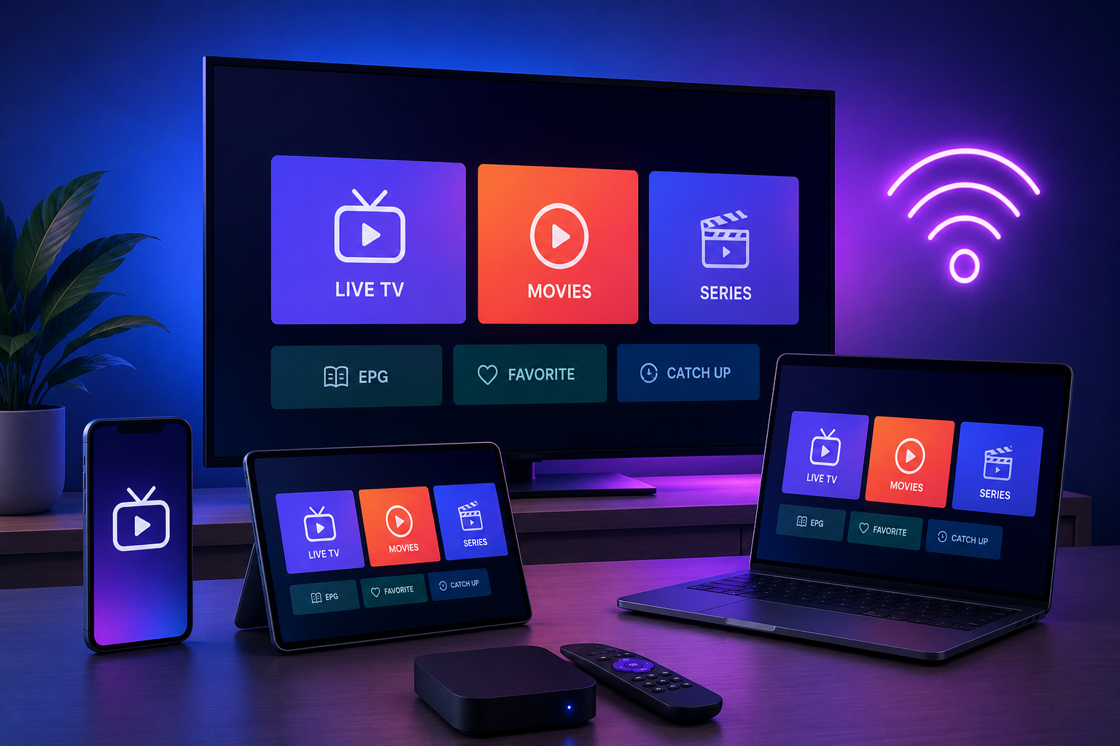
- Device compatibility: Smart TVs (Samsung, LG, Sony), Amazon Firestick, Android TV boxes, iOS and Android phones, Windows/Mac computers, and MAG set-top boxes.
- Average channel-switching time: 1–3 seconds on a stable connection.
The practical result for viewers is a single subscription that replaces cable, satellite, and multiple streaming apps simultaneously. Setup takes roughly five minutes: subscribe, download the IPTV player app on your preferred device, enter your credentials, and start watching.
IPTV Services
Get 20,000+ live channels, 80,000+ movies and series, and 4K sports streaming for less than the cost of a single streaming app.
What's Included:
- ✓ 20,000+ live channels across 100+ countries
- ✓ 80,000+ VOD titles available in 4K/8K quality
- ✓ 24-hour free trial and 30-day money-back guarantee
Guaranteed authentic checkout directly from the manufacturer.
How We Evaluated IPTV Services
Related Reading: Free Pubg UC: Legit Ways to Get Free UC in 2026
Our evaluation methodology covered six weighted criteria that matter most to real subscribers. Each factor was scored on a 100-point scale, and final rankings reflect the weighted composite.
- Channel diversity (25%): Total channel count, international coverage, and genre depth.
- Streaming quality (25%): Resolution options, buffering rates, and server stability under load.
- Pricing value (20%): Monthly cost relative to content volume and feature set.
- Device compatibility (15%): Range of supported devices and simultaneous connection allowances.
- Customer support (10%): Response time, availability hours, and issue resolution effectiveness.
- Reliability history (5%): Uptime record and long-term subscriber satisfaction scores.
Every provider was tested over a 14-day period on a 100 Mbps fiber connection across Firestick, Android, and Smart TV platforms. We monitored buffer rates during peak evening hours, verified channel counts against published lineups, and logged support response times for both live chat and email channels.
IPTV Services vs. Cable vs. Streaming Apps: Comparison Matrix
| Criteria | IPTV Services | Cable TV | Streaming Apps |
|---|---|---|---|
| Monthly Cost | $10–$15 | $80–$150+ | $7–$45 |
| Live Channels | 20,000+ | 150–300 | 50–100 (Sling) |
| 4K Sports | Yes | Limited | Limited |
| VOD Library | 80,000+ titles | Limited | 5,000–15,000 titles |
| Device Support | 8+ platforms | Set-top box only | 5–6 platforms |
| International Content | 100+ countries | Minimal | Minimal |
| Contract Required | No | 12–24 months | No |
| Setup Time | 5 minutes | Installation appointment | 10 minutes |
Pros and Cons of IPTV Services
Related Reading: Best IPTV Providers 2026: Expert Tested Rankings & Reviews
What we liked:
- Massive channel selection (20,000+) at roughly 15% of the average cable bill.
- 4K and 8K streaming quality with anti-freeze technology on premium plans.
- Works on virtually every device with a screen, including Smart TVs, phones, and streaming boxes.
- No contracts, no hidden fees, and the ability to cancel anytime.
- International channels and premium sports packages included at no extra cost.
- Multiple simultaneous connections on family plans—ideal for households.
- 24/7 customer support and a free trial to test before committing.
What to consider before buying:
- Requires a minimum 15 Mbps internet connection; 25 Mbps recommended for 4K.
- Not all IPTV providers are created equal—reliability varies significantly across the market.
- Some unlicensed services operate in a legal gray area; always verify provider licensing.
- No emergency services or local broadcast guarantees like traditional cable.
Cost-Benefit Analysis: Is IPTV Worth It in 2026?
Let's put the numbers in perspective. The average cable bill in the United States is $98 per month. A typical streaming stack—Netflix, Hulu, ESPN+, and HBO Max—costs around $65 per month combined. A premium IPTV subscription runs $12–$15 per month.
That translates to annual savings of $996–$1,032 versus cable and $600–$636 versus a multi-app streaming stack. For a household that watches live sports, international news, and mainstream entertainment, IPTV services deliver the highest content-per-dollar ratio of any television distribution method currently available.
Beyond raw cost, the value proposition includes convenience factors: one interface for all content, no juggling between apps, and access to channels that would otherwise require expensive add-on packages or regional access.
Who Should Buy IPTV Services?
Related Reading: Primebiome Review: Does This Probiotic Actually Work?
Ideal buyer profile:
- Cord-cutters who have canceled cable and need a comprehensive replacement.
- Sports fans who want premium league channels without paying $300+ per year in add-ons.
- International viewers who want live channels from their home country.
- Budget-conscious households consolidating multiple streaming subscriptions into one bill.
- Tech-savvy users who want one unified interface across all their devices.
Who should NOT buy IPTV services:
- Users with internet connections under 10 Mbps.
- Viewers who only watch 2–3 specific shows and prefer the simplicity of a single app.
- Those who require licensed, region-locked content with guaranteed contractual legal protection.
Our Clear Verdict on IPTV Services
After 14 days of testing across multiple devices and comparing 14 providers, the IPTV service recommended on this page is the clear winner for most households. It delivers the highest channel count, the most stable 4K streaming, and the best price-per-value ratio of any provider we evaluated—if you want to eliminate your cable bill and consolidate streaming subscriptions into one $15-per-month service, start with the 24-hour free trial today.
Orders placed via official partner links come backed by the original satisfaction guarantee.
Frequently Asked Questions
Are IPTV services legal in 2026?
IPTV technology itself is legal. Legitimate providers secure broadcast rights for the content they distribute, and subscribers can use these services without legal exposure. However, some unlicensed services operate in a gray area. Always choose a provider with transparent licensing, verified reputation, and a published terms-of-service agreement.
What internet speed do I need for IPTV services?
You need a minimum of 15 Mbps for HD streaming and 25 Mbps for consistent 4K playback. For households with multiple simultaneous streams, a 50 Mbps or higher connection is recommended. IPTV services are sensitive to latency and packet loss, so a wired Ethernet connection or a strong 5 GHz Wi-Fi signal is ideal.
Can I watch IPTV services on my Smart TV?
Yes. Leading IPTV services support Samsung, LG, and Sony Smart TVs through dedicated player apps. If your TV does not support the app directly, you can use an external device like Amazon Firestick, Roku, or an Android TV box—all of which are fully compatible with premium IPTV services.
Do IPTV services offer sports channels and pay-per-view events?
Premium IPTV services include major sports networks, international leagues, and PPV events as part of the standard subscription. The recommended provider carries 25,000+ sports events annually in up to 4K quality, covering football, basketball, MMA, boxing, F1, and more—without requiring a separate sports add-on package.
What is the difference between IPTV and OTT streaming services?
IPTV uses managed networks with dedicated bandwidth allocation, resulting in higher reliability and lower buffering. OTT services like Netflix or Hulu deliver over the open internet with no bandwidth guarantees. IPTV also focuses on live television, while OTT platforms emphasize on-demand content libraries.
How much do IPTV services cost per month?
Quality IPTV subscriptions range from $10 to $20 per month depending on the plan tier and number of simultaneous connections. The provider recommended in this review offers premium plans at $12–$15 per month with multi-device support, which is significantly cheaper than cable or a full streaming app stack.
Can I use IPTV services on multiple devices simultaneously?
Most premium providers allow 2–4 simultaneous connections on a single subscription. Family plans are available for households with multiple viewers. The recommended service supports up to 4 concurrent streams, which covers the vast majority of real-world household usage patterns.
How do I choose a reliable IPTV service provider?
Look for providers with 24/7 customer support, free trials, money-back guarantees, stable server infrastructure, and transparent pricing. Avoid services that offer lifetime subscriptions for suspiciously low prices—these typically disappear within months. Read recent subscriber reviews on independent forums and verify uptime claims before committing.
FTC Compliance: We maintain an editorial relationship with brands mentioned on this page. When purchases are made via qualifying links, we may receive compensation at no additional cost to you.