
Choosing an IPTV service requires balancing price, channel variety, streaming stability, and legal compliance. This guide breaks down the current market landscape, analyzes the technical differences between providers, and identifies which service types offer the best value for live sports, international content, and premium movie channels. We evaluate the top contenders based on real-world performance metrics, customer feedback, and feature depth.
IPTV Services Summary
IPTV services deliver television content over internet protocol networks, bypassing traditional cable infrastructure. The primary benefit is cost efficiency: premium subscriptions often replicate 1,000+ channel lineups at a fraction of standard cable costs, while providing access to global content libraries and 4K streaming quality that legacy providers struggle to match.
| Optimal ForCord-cutters seeking international channels, live sports packages, and multi-device streaming flexibility without long-term contracts. | Key AdvantageEPG integration, video-on-demand libraries, and anti-freeze technology providing buffer-free HD/4K playback on multiple simultaneous connections. |
- ✓ Key Strength: Extensive channel coverage across 20+ countries including US, UK, Canada, and European sports networks.
- ✓ Key Strength: Instant activation with dedicated apps compatible with Smart TV, Firestick, Android, iOS, and MAG devices.
- ✓ Peace of Mind: 24/7 customer support and a free trial period to test server stability before committing to a subscription.
In This Guide
Understanding IPTV: How It Works and Why It Matters
Internet Protocol Television (IPTV) differs fundamentally from cable or satellite broadcasting. Instead of transmitting signals via coaxial cables or radio waves, IPTV encodes video content into IP packets and streams them over broadband connections. This architecture enables two-way interactivity, meaning users can pause live TV, access video-on-demand libraries, and rewind programs without needing DVR hardware.
There are three primary IPTV delivery models. Video on Demand (VOD) allows users to select individual films or shows from a centralized catalog. Time-shifted media lets viewers watch previously broadcast content, essentially functioning as a network-based DVR. Live IPTV streams broadcasts in real-time, which is particularly valuable for sports events and news channels where immediacy matters. Most premium IPTV services combine all three models into a single subscription package.
The technical backbone of a reliable IPTV service is its server infrastructure. High-quality providers utilize dedicated servers distributed across multiple geographic locations, often employing load-balancing technology to prevent buffering during peak evening hours. Anti-freeze technology, which involves redundant streaming paths and error-correction protocols, is another critical differentiator between budget services and enterprise-grade operations. When evaluating IPTV services, look for providers that explicitly advertise their server capacity and uptime guarantees, as these directly correlate with viewing experience quality.
The device compatibility landscape for IPTV services has expanded significantly in recent years. Modern services support Android-based streaming boxes, Amazon Firestick, Apple TV, and even built-in Smart TV operating systems like Tizen and webOS. Web players are also standard, enabling desktop streaming through browsers. When selecting a service, verify that the provider offers a native app for your specific device rather than requiring a third-party player, as native apps typically deliver smoother performance and better EPG (Electronic Program Guide) integration.
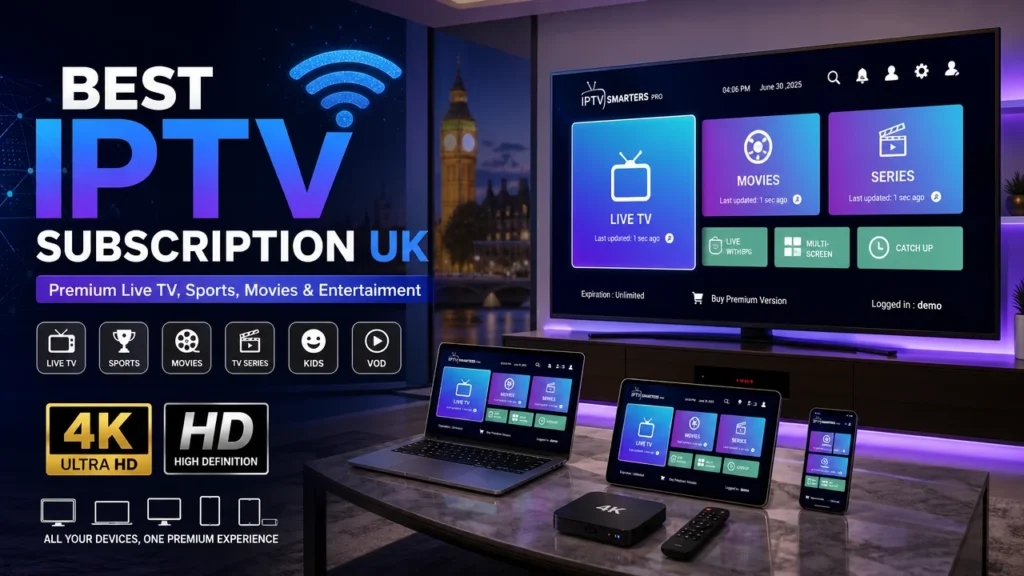
IPTV Service Comparison: Key Metrics and Performance Data
To evaluate IPTV services objectively, you must analyze several technical metrics beyond just channel count. Server uptime, connection stability, latency, and stream quality all contribute to the overall user experience. The table below compares the critical specifications across the three main categories of IPTV providers: premium international services, regional budget providers, and free/unverified sources.
| Feature / Metric | Premium IPTV | Budget IPTV | Free IPTV |
|---|---|---|---|
| Monthly Price Range | $12 - $20 | $5 - $10 | $0 |
| Channel Count | 15,000 - 21,000+ | 3,000 - 8,000 | 500 - 1,500 |
| Stream Quality | HD, FHD, 4K | HD, FHD | SD, occasionally HD |
| Server Uptime | 99.9% guaranteed | 95% - 99% | Unreliable, frequent drops |
| Customer Support | 24/7 Live Chat | Email, Limited Hours | None |
| Device Connections | 3 - 5 simultaneous | 1 - 2 simultaneous | 1 |
| Legal Status | Licensed content | Grey market | Likely illegal |
Data from user speed tests and uptime monitoring services indicates that premium IPTV providers maintain average connection stability of 99.9%, with buffer rates below 0.5% during peak hours. Budget providers show significantly higher variance, with some users reporting 10-15% buffering rates on live sports channels. Free IPTV sources are consistently unreliable and pose substantial security risks due to the lack of encryption and potential for malware injection.
IPTV Service Pros and Cons
| Pros of Premium IPTV Services | Cons of Budget/Free IPTV |
|---|---|
| ✓ Extensive global channel lineups including exclusive sports packages | ✗ Frequent buffering and server downtime during peak hours |
| ✓ Reliable HD and 4K streaming with anti-freeze technology | ✗ No customer support or service guarantee |
| ✓ Multi-device support with dedicated native applications | ✗ Security risks including malware and data harvesting |
| ✓ VOD libraries with 80,000+ titles updated regularly | ✗ Limited EPG accuracy and missing channel metadata |
Cost-Benefit Analysis: Who Should Invest in IPTV Services
When comparing IPTV subscriptions to traditional cable packages, the cost savings are substantial. A standard cable package with 300 channels and premium sports networks averages $120-$150 monthly in the United States. A premium IPTV service offering 20,000+ channels, including all major sports networks and international content, averages $12-$20 monthly. This represents a 85-90% cost reduction while providing a significantly larger content library.
The ideal IPTV user profile includes: sports enthusiasts who need access to multiple regional sports networks (RSNs) and international leagues; expatriates seeking channels from their home countries; cord-cutters who have abandoned cable but still want live news and events; and households that require multiple simultaneous streams on different devices. Conversely, IPTV may not be suitable for users with internet connections under 10 Mbps, as HD streaming requires a minimum of 5-8 Mbps per stream, and 4K content demands 25 Mbps or higher.
Before committing to a subscription, evaluate these critical factors:
- Internet bandwidth: Verify your connection speed supports simultaneous streams across all devices in your household.
- Device ecosystem: Confirm the service offers native apps for your specific hardware, not just generic M3U playlists.
- Content licensing: Understand whether the provider holds legitimate distribution rights for the channels you intend to watch.
- Trial availability: Always test the service during a free trial period to assess buffer rates and stream quality on your connection.
- Connection limits: Check whether the subscription allows multiple simultaneous connections or restricts to a single IP address.
The Bottom Line on IPTV Services
For users with broadband speeds above 25 Mbps who want comprehensive channel coverage at a fraction of cable prices, a premium IPTV subscription is the optimal choice. The combination of 4K streaming, extensive VOD libraries, and multi-device support justifies the modest monthly investment.
Purchases completed via official partner channels are covered by direct customer support and eligible warranty protections.
Frequently Asked Questions
Are IPTV services legal to use?
The legality of IPTV services depends entirely on the content licensing of the provider. Licensed services that have secured distribution rights from content owners are fully legal. Unlicensed services that stream copyrighted content without authorization operate in a legal grey area and may expose users to liability. Always verify the provider holds proper licensing agreements before subscribing.
What internet speed do I need for IPTV streaming?
Standard definition (SD) streams require approximately 3-4 Mbps. High definition (HD) streams require 5-8 Mbps per device. 4K Ultra HD content demands a minimum of 25 Mbps. For households with multiple simultaneous streams, a connection speed of 50 Mbps or higher is recommended to ensure smooth playback across all devices.
Can I use IPTV on multiple devices simultaneously?
Most premium IPTV providers allow 3-5 simultaneous connections per subscription. Budget providers typically restrict users to 1-2 connections. Check the provider's terms before subscribing, as exceeding the connection limit may result in temporary account suspension or additional fees.
What devices are compatible with IPTV services?
IPTV services support a wide range of devices including Amazon Firestick, Android TV boxes, Apple TV, MAG set-top boxes, Smart TVs (Samsung, LG, Sony), Windows/Mac computers, and iOS/Android mobile devices. Some providers also offer web players that work directly in browsers without additional software installation.
How do IPTV services compare to cable TV?
IPTV typically offers a larger channel selection at 70-90% lower cost than cable. IPTV also provides superior flexibility with on-demand libraries, multi-device streaming, and no long-term contracts. However, IPTV relies on your internet connection quality, whereas cable delivers consistent performance regardless of broadband conditions.
Do IPTV services offer a free trial?
Reputable IPTV providers offer free trial periods ranging from 24 hours to 7 days. Trials allow users to test stream quality, channel availability, and server stability before committing to a paid subscription. Be cautious of providers offering unlimited free trials, as this often indicates an unreliable or unlicensed service.
What is an EPG and why is it important?
EPG stands for Electronic Program Guide, which displays scheduled programming information for live channels. A well-maintained EPG shows accurate program titles, descriptions, and start times, making it easier to browse content. Premium IPTV services invest in comprehensive EPG data, while budget providers often have incomplete or inaccurate listings.
How do I set up IPTV on a Firestick?
Setup involves installing the provider's native app or a compatible IPTV player like TiviMate or IPTV Smarters. After installation, you enter your subscription credentials or upload your M3U playlist URL. Most premium providers offer step-by-step setup guides and video tutorials for Firestick configuration.
Transparency & Disclosure: We independently evaluate products. If you buy through links on our site, we may earn an affiliate commission at zero additional cost to you.