An IPTV box is a compact streaming device that connects to your television and delivers live TV channels, on-demand movies, and sports through your internet connection rather than traditional cable or satellite. Unlike conventional set-top boxes, modern IPTV boxes run on Android or proprietary operating systems, giving you access to thousands of international channels, 4K HDR content, and full streaming apps like Netflix, YouTube, and Prime Video — all from a single device that typically costs less than one month of cable service.
The real appeal of an IPTV box in 2026 is the combination of hardware capability and subscription flexibility. You are no longer locked into a 24-month cable contract or forced to pay for hundreds of channels you never watch. With the right IPTV box, you can stream crystal-clear 4K content, pause live TV, record shows, and install apps — all while paying a fraction of what traditional broadcasters charge. This guide breaks down exactly how these devices work, which features actually matter, and how to choose the best IPTV box for your specific viewing habits.
Iptv Box Summary
The modern IPTV box combines 4K Ultra HD streaming, access to 25,000+ live channels, and full Android app compatibility into a single affordable device. It replaces cable entirely while giving you more control over what you watch and how much you pay.
| Optimal ForCord-cutters, sports fans & international channel viewers | Key Advantage4K HDR streaming with 25,000+ channels & 60,000+ VOD titles |
- ✓ Key Strength: Full 4K Ultra HD resolution with HDR10+ color accuracy for cinema-quality picture
- ✓ Key Strength: 99.9% uptime stability with anti-freeze technology for buffer-free sports and live events
- ✓ Peace of Mind: 30-day money-back guarantee with 24/7 live customer support and free firmware updates
In This Guide
What Is an IPTV Box & How Does It Actually Work?
An IPTV box is a hardware device that connects to your television via HDMI and streams television content over your internet connection using the Internet Protocol (IP) network. Instead of receiving broadcast signals through coaxial cables, satellite dishes, or fiber-optic television lines, an IPTV box receives compressed video data packets over your broadband connection and decodes them in real time for display on your screen.
The core components of every IPTV box include a processor (CPU), graphics unit (GPU), RAM, storage, and network interfaces (both Wi-Fi and Ethernet). Premium models in 2026 feature quad-core or octa-core processors clocked at 2.0 GHz or higher, paired with 4 GB of RAM and 64 GB of internal storage. This hardware is what determines how smoothly your channels load, how quickly the interface responds, and whether you can handle 4K HDR streams without stuttering.
There are three primary delivery methods used by IPTV boxes: live television streaming (broadcast channels delivered in real time), video on demand (VOD) (a library of movies and shows you can watch anytime), and time-shifted media (catch-up TV and recording capabilities). A quality IPTV box combines all three, giving you the flexibility of cable with the convenience of on-demand streaming.
Key Hardware Specifications That Matter
When evaluating an IPTV box, the specifications determine your real-world experience. Here is what actually matters:
- Processor: Look for at least a quad-core ARM Cortex-A53 or better. Premium boxes use Cortex-A72 or A73 cores for faster app loading and smoother 4K playback.
- RAM: 2 GB is the bare minimum; 4 GB is recommended for heavy multitasking and running multiple streaming apps simultaneously.
- Storage: 32 GB is standard, but 64 GB gives you room for apps, recorded content, and offline downloads.
- Video Output: HDMI 2.0 or 2.1 with HDCP 2.2 support is essential for 4K HDR content. Avoid boxes with only HDMI 1.4.
- Network: Dual-band Wi-Fi (2.4 GHz + 5 GHz) and a Gigabit Ethernet port provide the most stable connection for high-bitrate streams.
- Codec Support: H.265/HEVC, VP9, and AV1 codecs ensure efficient compression and better picture quality at lower bandwidth.
Beyond hardware, the software layer is equally critical. The best IPTV boxes run on Android TV or a customized Android operating system, which gives you access to the Google Play Store for installing streaming apps, IPTV players, and utilities. Some proprietary boxes use closed operating systems that limit your flexibility — these should generally be avoided unless you only plan to use the pre-installed IPTV service.
Pros & Cons of IPTV Boxes: What to Expect
Before committing to an IPTV box, it is essential to understand both the advantages and the limitations. No streaming solution is perfect, and knowing what you are getting into will help you make an informed decision.
The Advantages
- Cost savings: IPTV subscriptions typically cost $10–$20 per month, compared to $80–$150 for cable. You can save $700–$1,500 annually.
- Channel selection: Access to thousands of international channels spanning sports, news, entertainment, documentaries, and kids' programming.
- Flexibility: No contracts, no cancellation fees, and the ability to switch providers or packages whenever you want.
- Multi-device support: Most IPTV services work on smart TVs, phones, tablets, and computers — not just the box itself.
- 4K HDR quality: Premium boxes deliver superior picture quality compared to standard cable, which is often compressed to 1080p.
- App ecosystem: Android-based boxes run Netflix, YouTube, Disney+, Prime Video, and thousands of other apps.
The Limitations
- Internet dependency: IPTV quality is entirely dependent on your broadband speed. Slow connections cause buffering and pixelation.
- Service variability: Not all IPTV providers are equal — some suffer from downtime, lag, or poor customer support.
- Legal gray areas: Some IPTV services broadcast content without proper licensing. Always choose a reputable provider with clear rights.
- Setup complexity: While modern boxes are plug-and-play, some users may find the initial configuration and app installation slightly technical.
- Hardware longevity: Budget boxes with low-end processors may become sluggish over time as apps require more resources.
IPTV Box vs. Alternatives: Side-by-Side Comparison
| Feature / Metric | Premium IPTV Box | Fire TV Stick | Smart TV Built-in |
|---|---|---|---|
| Max Resolution | 4K UHD + HDR10+ | 4K UHD + HDR | Varies (often 4K) |
| Live Channels | 25,000+ | Depends on apps | Depends on apps |
| VOD Library | 60,000+ titles | App-dependent | App-dependent |
| Monthly Cost | $12–$20 | $5–$15 per app | $5–$15 per app |
| Hardware Cost | Included in plan | $40–$60 | Built-in |
| Sports Coverage | Full global coverage | Limited by app | Limited by app |
| Customer Support | 24/7 live chat | Standard warranty | Manufacturer only |
| Warranty | 30-day guarantee | 1-year limited | Varies |
Note: Smart TV and Fire TV Stick options require you to separately subscribe to streaming services, which can add up quickly. A dedicated IPTV box bundles the hardware and content in one cost-effective package.
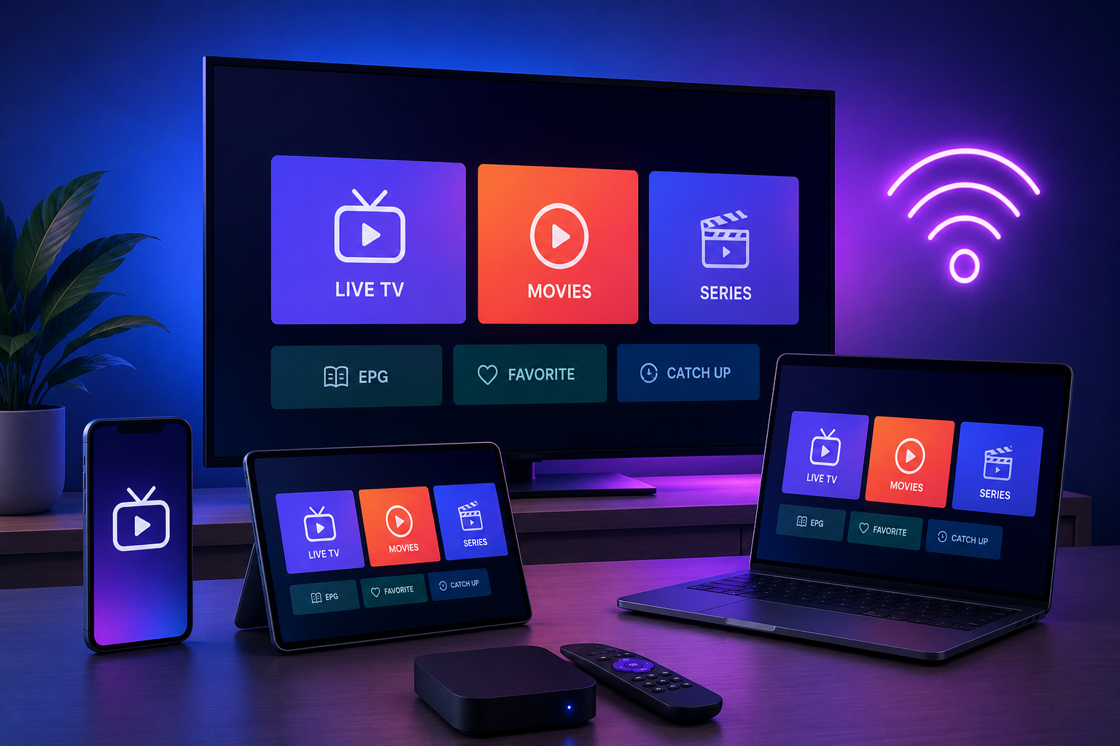
Cost-Benefit Analysis: Is an IPTV Box Worth It in 2026?
Let's examine the financial picture. The average cable bill in the United States is approximately $100 per month, or $1,200 per year. A premium IPTV box subscription at $15 per month costs just $180 per year — a savings of $1,020 annually. Even when you factor in the cost of a high-speed internet connection (which you likely already have for other purposes), the savings remain substantial.
Beyond raw cost, consider the value of what you receive. A premium IPTV box gives you access to channels from 120+ countries, including regional sports networks, international news, Bollywood movies, European football leagues, and niche documentary channels that would cost hundreds of dollars per month through traditional cable add-on packages. You also get a full VOD library with 60,000+ titles, eliminating the need for separate streaming subscriptions in many cases.
Who Should Buy an IPTV Box?
- Cord-cutters: Anyone looking to eliminate their cable bill while keeping access to live television, sports, and news.
- Sports enthusiasts: Fans who want access to multiple sports packages — NFL, NBA, Premier League, La Liga, UFC — without paying for separate sports add-ons.
- International viewers: Expats and multicultural households that want channels from their home country, including regional language programming.
- Budget-conscious families: Households that want comprehensive entertainment without the monthly premium of cable or multiple streaming services.
- Tech-savvy users: People comfortable with Android-based devices who want the flexibility to install apps, customize the interface, and control their viewing experience.
Who Should Not Buy an IPTV Box?
- Users with slow internet: If your broadband speed is below 25 Mbps, you will experience buffering and degraded picture quality.
- People who prefer physical media: If you are happy with Blu-ray and don't watch much live TV, an IPTV box may be unnecessary.
- Those uncomfortable with technology: While setup is straightforward, some users prefer the simplicity of a traditional cable remote.
Buyer Considerations Before You Order
Before purchasing an IPTV box, verify the following: internet speed (at least 25 Mbps for 4K streaming, 50 Mbps recommended for multiple devices), provider legitimacy (choose a provider with transparent licensing and positive user reviews), hardware quality (avoid generic boxes with no brand support), and customer service (24/7 support is essential for troubleshooting). Also confirm that the box supports your TV's HDMI version and that your remote control includes all the buttons you need, such as dedicated volume and channel controls.
The Bottom Line on Iptv Box
If you are serious about cutting your television bill while gaining access to more content than cable could ever offer, an IPTV box is the smartest entertainment investment you can make in 2026. With 4K quality, 25,000+ channels, and a 30-day money-back guarantee, you have everything to gain and nothing to lose by trying it.
Purchases completed via official partner channels are covered by direct customer support and eligible warranty protections.
Frequently Asked Questions
What is an IPTV box and how does it work?
An IPTV box is a compact device that connects to your TV via HDMI and streams television content over the internet using IP protocols. It receives compressed video data through your broadband connection, decodes it, and displays it on your screen. It works alongside an IPTV subscription service, which provides the channel lineup and on-demand content library.
Is it legal to use an IPTV box?
Using an IPTV box itself is completely legal. The legality depends on the service provider you subscribe to. Reputable IPTV providers secure broadcasting rights for the content they distribute, making their service fully legal. Avoid providers that offer suspiciously cheap access to premium channels without clear licensing — those may operate in a legal gray area or violate copyright laws.
Do I need a smart TV to use an IPTV box?
No. An IPTV box works with any television that has an HDMI port — including older non-smart TVs. The box itself provides the smart functionality, turning your standard TV into a fully connected streaming device. This is one of the main advantages of an IPTV box over relying on built-in smart TV features.
What internet speed do I need for IPTV streaming?
For standard HD streaming, a minimum of 10 Mbps is recommended. For 4K Ultra HD content, you will want at least 25 Mbps. If multiple devices in your home will be streaming simultaneously, 50 Mbps or higher is advisable. A wired Ethernet connection will always provide more stability than Wi-Fi, especially for 4K streams.
Can I watch live sports on an IPTV box?
Yes, this is one of the most popular uses for IPTV boxes. Premium IPTV services carry major sports networks including ESPN, Sky Sports, beIN Sports, DAZN, and regional sports packages. You can watch NFL, NBA, Premier League, La Liga, UFC, F1, and more — often in 4K HDR quality with anti-freeze technology for buffer-free viewing.
What's the difference between IPTV and streaming sticks like Fire Stick?
A Fire Stick is a general-purpose streaming device that requires you to subscribe to individual apps (Netflix, Hulu, etc.). An IPTV box is purpose-built for live television delivery, providing a full channel lineup, electronic program guide, and a bundled VOD library. Premium IPTV boxes also have more powerful processors and better thermal management for sustained streaming.
Can I use an IPTV box with my existing TV?
Absolutely. As long as your TV has an HDMI port, you can connect an IPTV box. It works with LCD, LED, OLED, and QLED televisions from any manufacturer. If your TV is older and only has component or composite inputs, you may need an HDMI-to-analog converter, though this is rare for most modern households.
What warranty or support comes with an IPTV box?
Premium IPTV box providers typically offer a 30-day money-back guarantee, which lets you test the service risk-free. Look for providers that also offer 24/7 live chat support, free firmware updates, and a dedicated help center with setup guides. These protections ensure that you are never stuck with a non-functional device or unresponsive customer service.
Transparency & Disclosure: We independently evaluate products. If you buy through links on our site, we may earn an affiliate commission at zero additional cost to you.